Page 3
Brush Piles for Pollinators
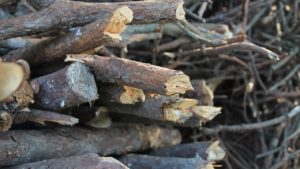
Brush piles and stacked wood protect overwintering insects and small animals.
Piles of undisturbed leaves and twigs in the garden can serve as secure resting places for larvae and chrysalises until they emerge. Considered untidy by some, a few brush piles are important features to keep pollinators on the property.
Maybe you can build a more decorative structure of branches and sticks, loosely stuffed with leaves. Simply letting fallen leaves collect under shrubs and dormant perennials instead of hauling them off to the recycling center will keep more pollinators nearby.
Birds, insects, and small animals welcome this cozy shelter when inclement winter weather arrives. Pollinating insects overwintering here will populate your property right from the start of the next growing season. Birds dart in and out of the brush pile as predators approach, and they’ll also help themselves to an insect snack.
Go Native
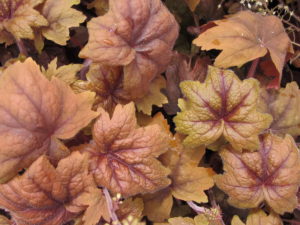
X Heucherella ‘Sweet Tea’, an intergeneric cross.
Planting native species and nativars (cultivars of native species) helps sustain populations of beneficial insects, including bees and butterflies and other pollinators.
Small organisms, such as insects, are the foundation on which the entire food chain is established. You’ll see more holes in the leaves, but learn to tolerate this in order to have an ecologically balanced habitat. Envision holey or missing leaves as another brood of bluebirds and wrens, butterflies and frogs. “Well done!”
Insects and plants evolved together, and any ecosystem has its own unique set of organisms. Find out which plants are native to your region, and plant at least some of them. And put away the chemicals, which rather defeat the purpose, don’t they? Bees and butterflies have suffered as a result of pesticide overuse. Loss of habitat has severely diminished the territory they used to call home, so we should do what we can to sustain their populations.
-
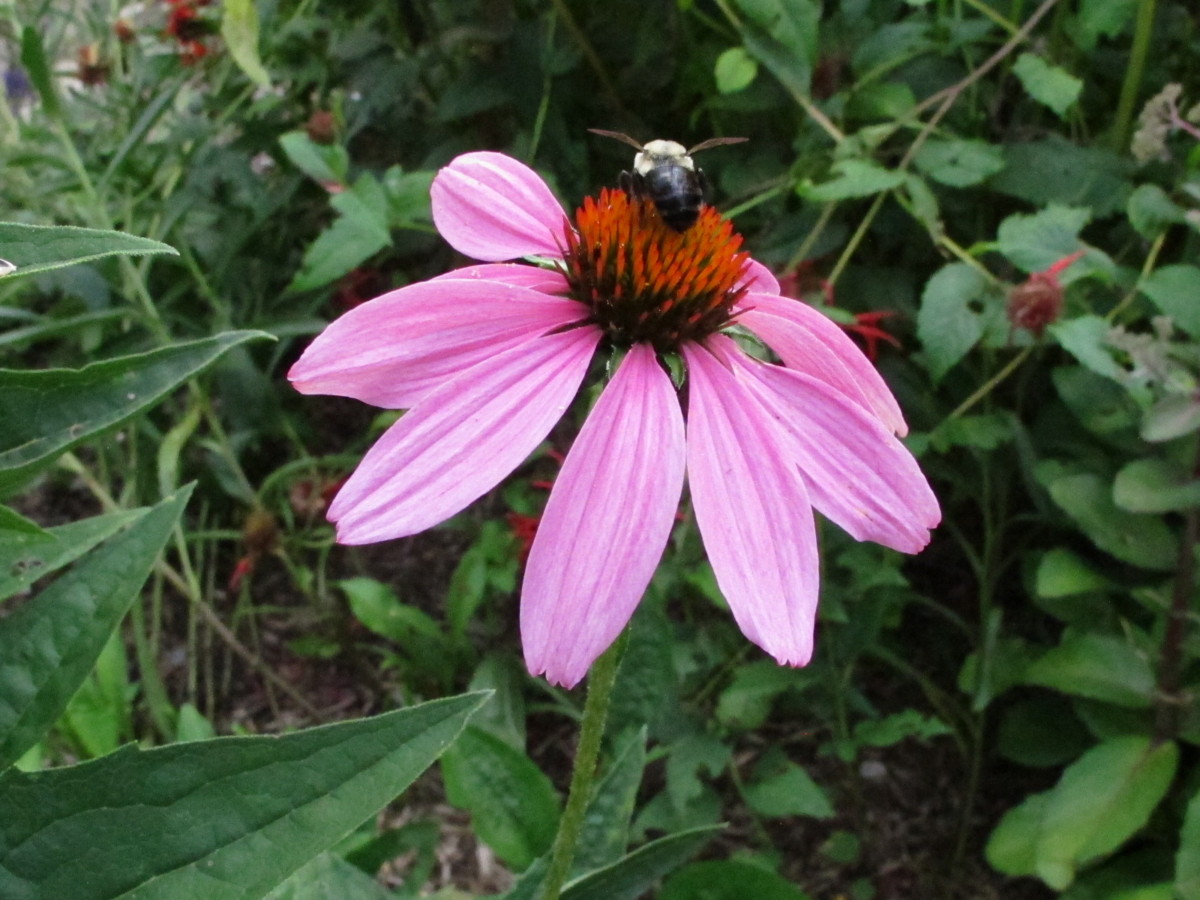
- Purple coneflower (Echinacea) with bumble bee.
-
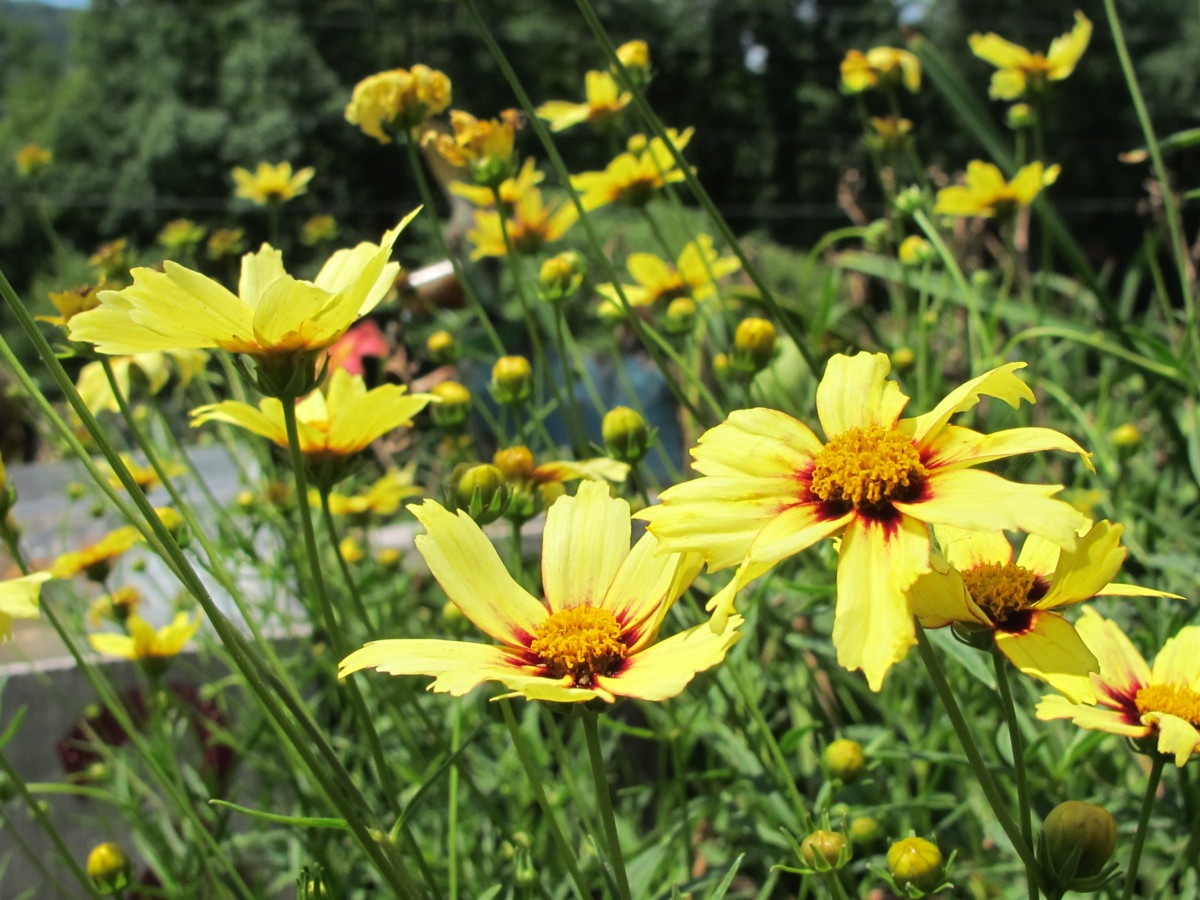
- Coreopsis, one of the tickseeds.
-
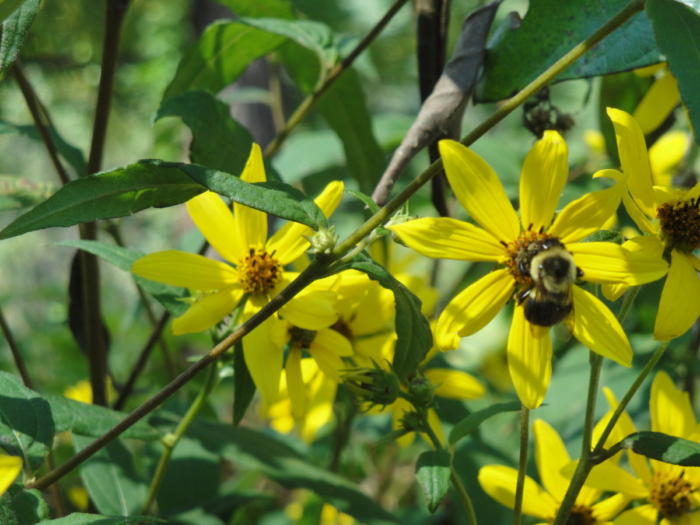
- Helianthus, tall perennial sunflower, late blooms.
-
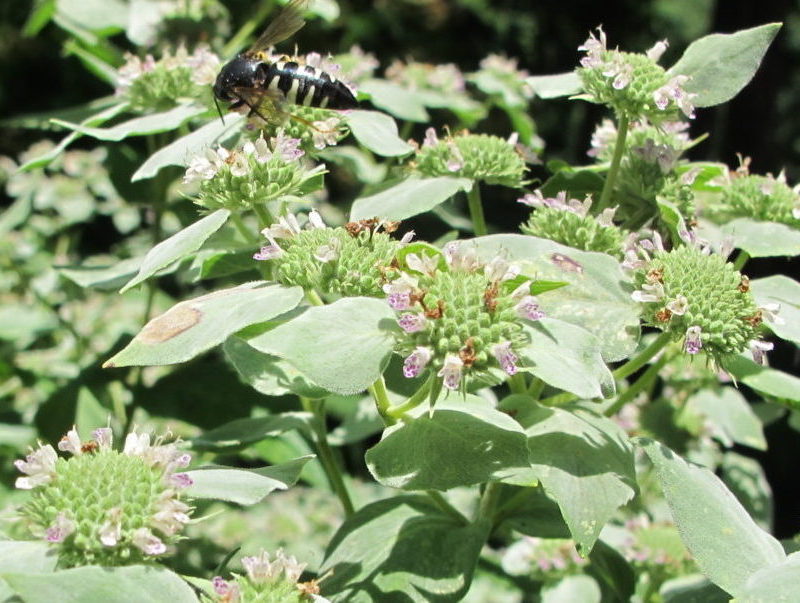
- Mountain mint, Pycnanthemum, a spreader.
A Comprehensive Garden Plan
Dream, Plan, and Implement
Want to dream big? Perhaps you’ve considered a dense border against the back fence, maybe 60′ or 100′ long, edged with broad, sweeping curves. This is a great opportunity to create a layered environment that would support a diverse assortment of insects and animals. “Hmmm…there’s not much lawn left back here, so we might as well remove it…”
On the Right Path
Incorporating a pathway through the garden introduces an almost magical feature, turning the garden into your own personal parkland. Here, nature will embrace you. Don’t forget to add a bench or two. I love it already!
If you have access to a large quantity of topsoil, add another dimension to this permanent garden. Modify the elevation by sculpting gentle mounds and valleys. Any garden bed or border is enhanced by elevating it 8″ or 18″ above surrounding lawn or paved surfaces. Plants just display better this way. Varying the elevation is so much more engaging than flat land.
Incorporating soil amendments and loosening the existing soil also adds some height to the bed. But be careful to maintain drainage swales through the property without altering where they originally emptied onto neighboring properties.
Stone
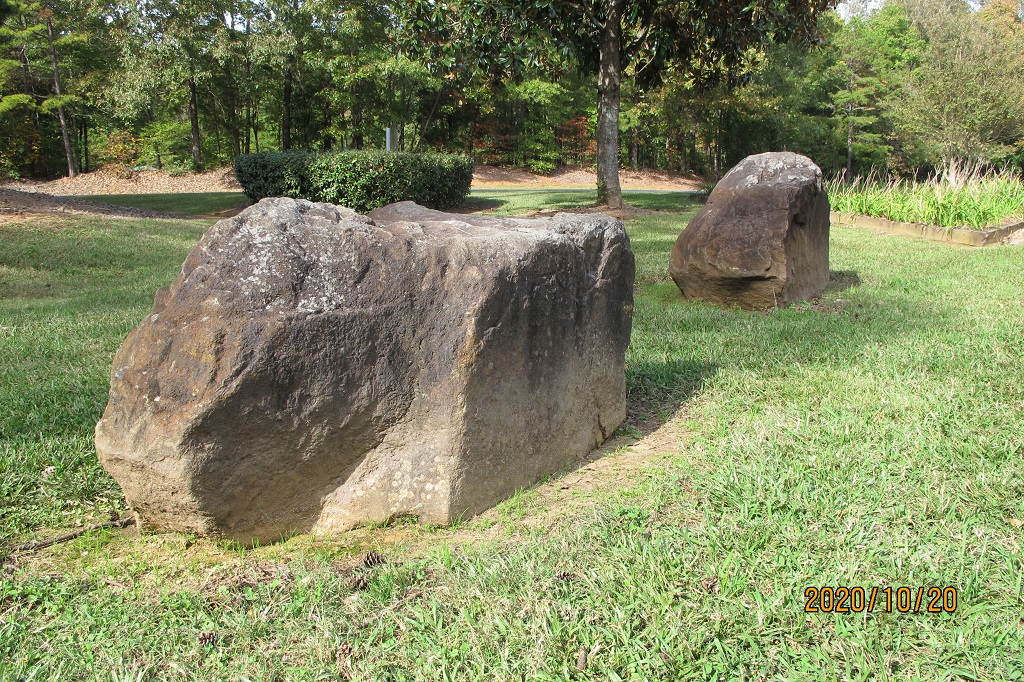
Have any boulders to add? A few tips for designing with stone:
- Use natural colors, such as gray and brown.
- Major lines or striations should be parallel to each other.
- Plant them into the ground to anchor them.
- If your boulders are too large to move (photo, above), bring in some soil and plant a garden around them.
- And use large boulders, the ones that require machinery or a few strong backs to move them.
These are optional, of course, but, wow... do they rock!
Diversify
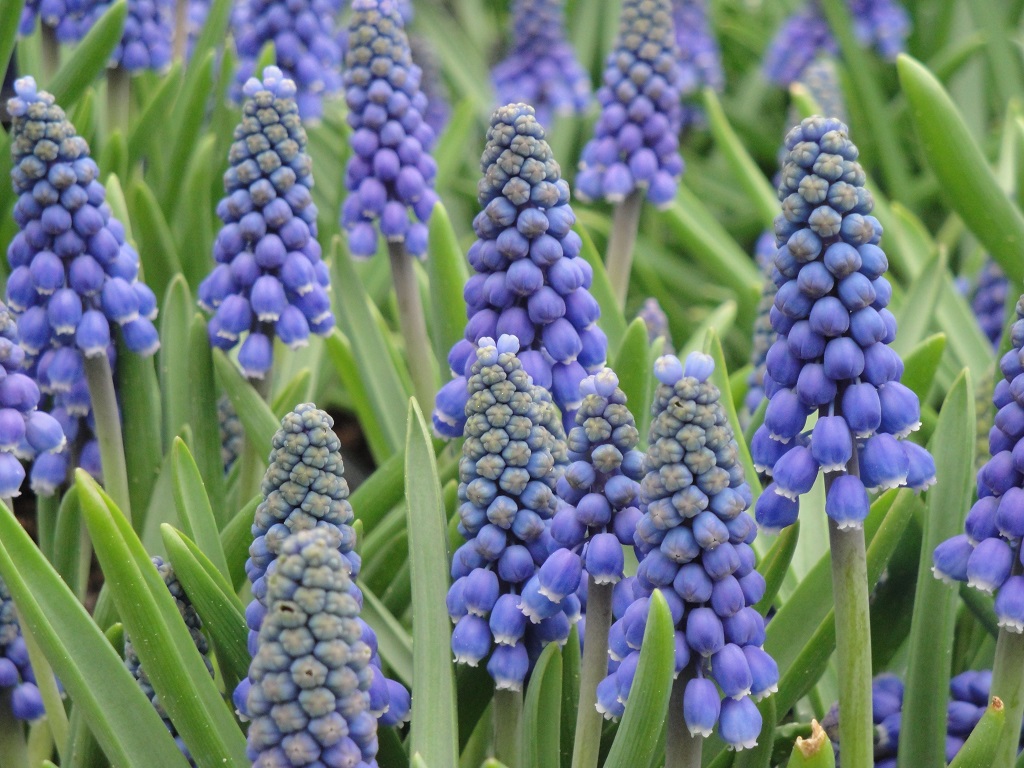
Grape hyacinths, from bulbs.
Using a combination of trees, shrubs, and smaller flowering plants extends the bloom season. This will appeal to a greater number of pollinating species.
Early risers, such as honey bees, will be grateful for the crocus, grape hyacinth (photo, right), and daffodil bulbs planted the previous autumn. Again, plant them in masses. Annuals and perennials can be planted right over or around them.
A few deciduous native trees, clusters of shrubs, flowering perennials, and some herbs and annuals compose an attractive habitat for a variety of insects, amphibians, reptiles, birds, and mammals.
Some Native Woody Plants
Here’s a partial list of native woody plants for the southeastern U.S.:
- American holly (Ilex opaca)
- redbud (Cercis canadensis)
- flowering dogwood (Cornus cultivars)
- fringe tree (Chionanthus virginicus)
- blueberries
- spicebush (Lindera benzoin)
- Viburnum species
- Fothergilla major
- Amelanchier
- sourwood (Oxydendrum arboreum)
- Fruit trees, such as apple, cherry, crabapple, peach, pear, and plum have beautiful flowers that pollinators love, but they do require some maintenance for good fruiting. Ask for varieties that don’t require spraying, or skip the harvest and look for ornamental fruit trees. Many of our native moths and butterflies depend on these trees to host their young.
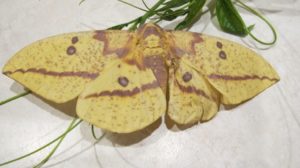
(***Update***: One moth you might want to see in your garden is the beautiful Imperial moth (photo above). Although these spectacular moths don’t consume anything as adults, birds are eager to consume them. Larvae feed primarily on oak, maple, sassafras, sweet gum, and pine trees. The ones I raised loved the non-native crape myrtle. Quite a sight! 8/3/2020.)
Asking for Help
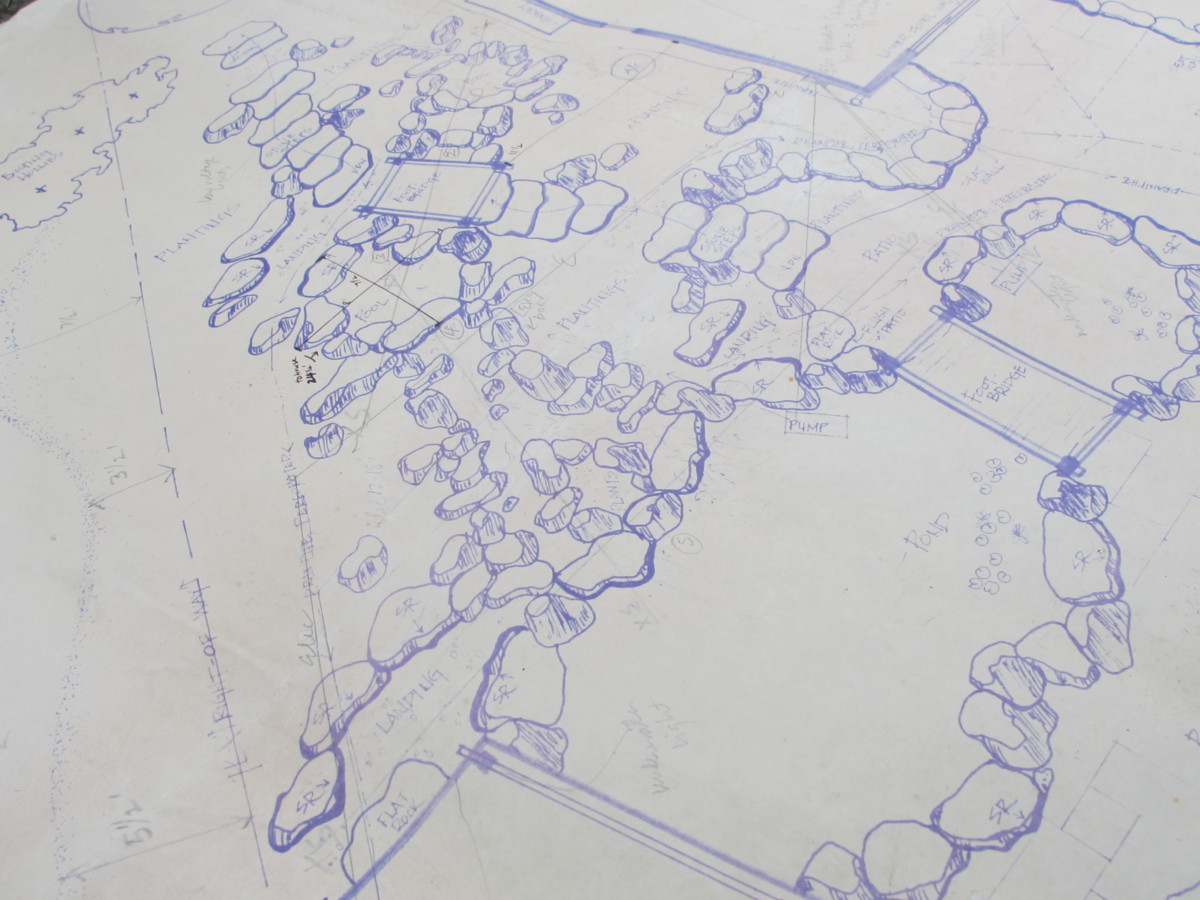
A complex layout requires careful planning. By planting fairly thickly, but still appropriately, you can create a lush environment rich with flowers blooming every season. Your own personal paradise!
But flowers aren’t the only objective. Many insects, particularly butterflies, have specific demands concerning food for their young. Monarch butterflies lay eggs only on milkweeds, and gulf fritillary butterflies (photos, below) need passionflower vines. Spicebush swallowtail butterflies need spicebushes! Don’t overlook simple “weeds” that might attract butterflies, such as plantain for the buckeyes or violets for the great spangled fritillaries.
Find out what the adults eat, and, more importantly, which host plants their finicky young require. Adult pollinators tend to be general feeders, seeking pollen and nectar from a much broader range of plant materials.
-
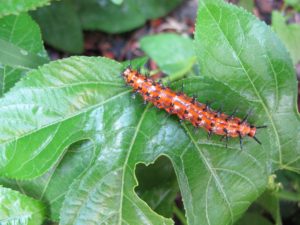
- Gulf fritillary butterfly larva.
-
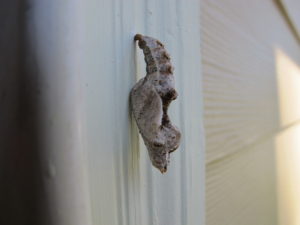
- Fully formed chrysalis.
-
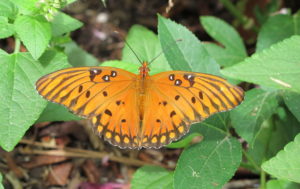
- Female gulf fritillary butterfly.
These garden ideas might motivate you to improve your landscape. If you prefer to have a professional design and/or plant it for you, visit the next home and garden show. Landscape designers often set up full-scale landscapes in the exhibition halls for potential customers looking for ideas. Ask questions, and compare styles among the companies. Also, let them know you want lots of native species in the garden to benefit local pollinators. Provide a list of plants you’d tentatively like to include.
Maybe a friend or neighbor has had landscape work installed that appeals to you. Check company references, and make sure it’s properly licensed and insured.
Check With Local Sources
Do plenty of research to familiarize yourself with the terms used in the trade. Check online for information pertaining to bees and butterflies and other pollinators living in your region. Maybe nearby community colleges and botanical gardens offer classes in landscape design, entomology (the study of insects), woody plant materials, flower arranging, annuals and perennials, water gardening…
Dig In!
After having underground utilities marked, bring in the materials to improve the soil. Depending on the quality of the existing soil, you might need pine fines, peat moss, compost, aged manure, and/or coarse sand. Damp soil is easier to dig than dry soil.
Place the trees and large shrubs first. Space them out according to their mature size and light requirements. Choose shrubs and perennials that will grow under the trees; don’t expect lavender or coneflowers to survive under a shady canopy once the trees grow taller.
Keep the trees toward the north side of the garden (northern hemisphere) if you can. This lets more sun reach plants to their south. But don’t squeeze them against the fence or the property line. Make the bed wide enough to accommodate the trees and the herbaceous plants. Most perennials can be moved, though, if the garden needs to be expanded in future years.
More Considerations
For a natural appearance, avoid lining up the plants. Place the tree about one-third of the way from the edge of a bed instead of in the center. Step back and observe plant placements from all sides before planting them.
Consider your neighbors, too. You don’t want to shade the vegetable garden they’ve been enjoying for the past 10 years. Maybe that end of the garden can be planted with a group of smaller viburnums instead of the tupelo you had been planning on.
-
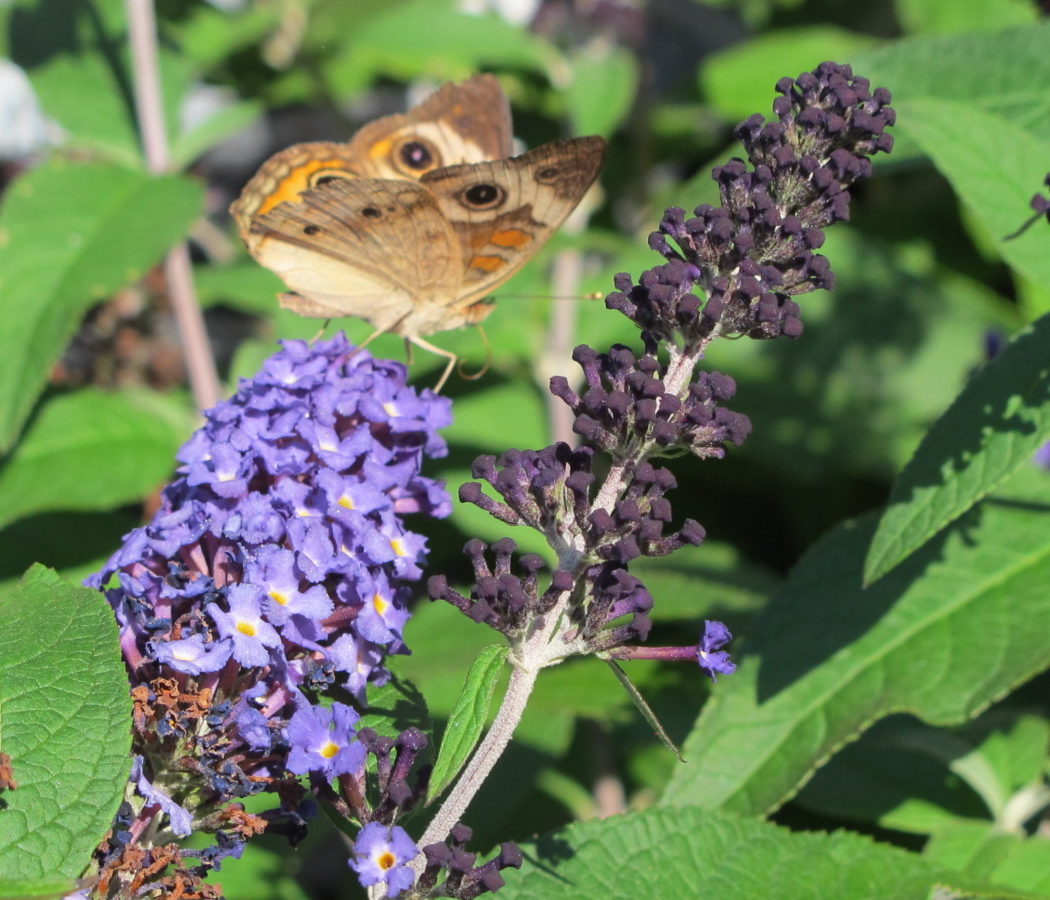
- Common buckeye butterfly on butterfly bush.
-
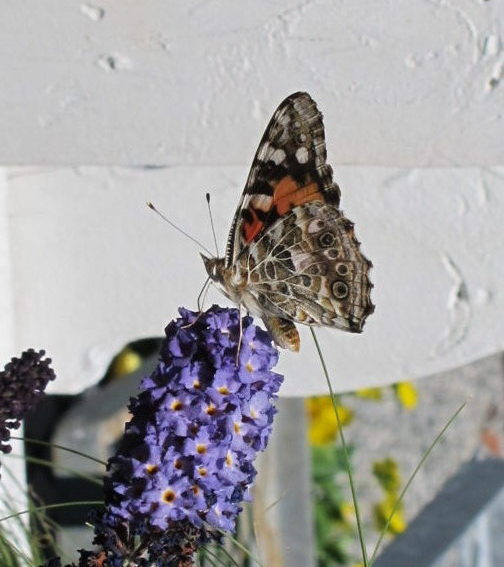
- American painted lady (??) butterfly on Butterfly bush, Buddleia Pugster Blue.
-
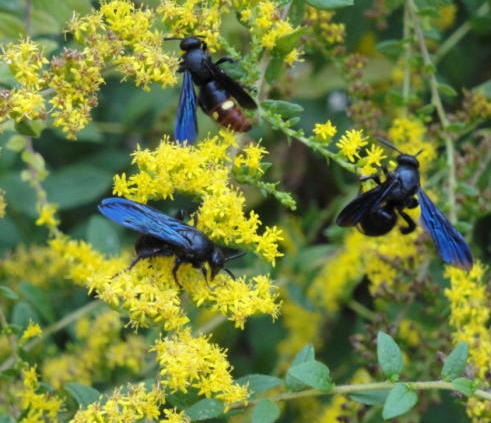
- Pollinators on goldenrod (Solidago).
Small Is Beautiful
Consider using dwarf or small cultivars. This is more convenient than having to prune plants that grew larger than you thought they’d grow. And one thing you don’t want in a “naturalistic” garden is a group of shrubs that must be sheared twice a year to keep them in bounds! Also, bees and butterflies and other residents of your new garden will appreciate not being disturbed to this degree.
Don’t plan on completing this project in only one day or a weekend; pace yourselves. Please refer to the articles about soil preparation and other subjects listed below. Doing it right from the start will lead to a much more enjoyable experience in the garden…for you and for the bees and butterflies.
Links
Here’s a list of informative articles in this blog, The Farm In My Yard:
How to Prepare the Soil: An Introduction
Fall Cleanup: Brush Piles for Wildlife
Not just for vegetables, Soil Prep 101 for Your Vegetable Garden
Pollinators: What’s All the Buzz About?
A Passion for the Gulf Fritillary Butterfly
The Imperial Moth: A Magnificent Creature
Northern Cardinals: Flashes of Brilliance
A Garden for the American Goldfinches
Improving the Landscape Is Like Painting a Picture
Dealing With Deer: A Multi-Pronged Approach
Plan Now for Spring-Flowering Bulbs
The USDA Plant Hardiness Zone Map
Hardening Off: Getting Ready to Plant includes a section on using warm and cool colors.
Lavender: History and How to Plant It
Annuals That Tolerate Heat, and Garden Tips
Iced Tea Pots: Cool and Refreshing
Planting Trees and Shrubs In the Landscape, Part 1
* * * * * * * *
For more help, here’s a comprehensive website: the U.S. Fish and Wildlife Service.
For more information about pollinators, visit the Pollinator Partnership website.
Happy gardening!
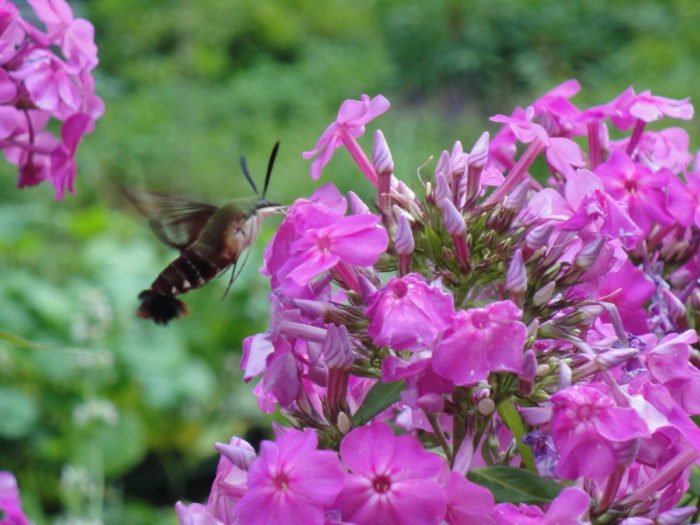
A hummingbird moth on perennial garden phlox, in the Maryland garden.
Headings
Page 1: National Pollinator Week, What Bees and Butterflies Need (The Missing Elements), A Garden of Annuals for Bees and Butterflies (What Is An Annual?, What Do Pollinators Do?, Cross Pollination, Single? Double? Or Triple Flowers?, Sunflowers, Where To Plant?, Sun or Shade?, How Big Is Big?, In One of My Gardens, Container Gardens)
Page 2: Added Benefits (Vegetables and Fruits, Braconid Wasps, For the Birds, Let ‘Em Seed About, Water, Cut Flowers, Try Some of These for the Bees and Butterflies), Perennial Favorites for Bees and Butterflies (Permanent Residents, More Perennials, Lavender, Herbs, The Apiaceae Family, The Lamiaceae Family)
Page 3: Brush Piles for Pollinators (Go Native), A Comprehensive Garden Plan (Dream, Plan, and Implement, On the Right Path, Stone, Diversify, Some Native Woody Plants, Asking for Help, Check With Local Sources, Dig In!, More Considerations, Small Is Beautiful), Links