Page 3
Tip #4: Pollinating Your Potted Peppers
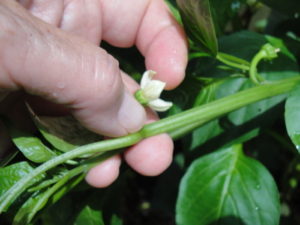
Sweet bell pepper.
In the cold months, you might occasionally see honey bees collecting nectar and pollen from winter bloomers outside. But their visits are limited to mild winter days and the pollinators can’t be counted upon to pollinate your peppers. So, how can we get the flowers pollinated?
Plants in the Solanaceae family, including peppers, tomatoes, and eggplants, have “perfect” flowers. Each flower contains both male and female reproductive parts. In other words, the flowers are self-pollinating in the right conditions. All we need to do is to loosen the pollen grains from the anthers and get them to land on the receptive stigma in the same flower.
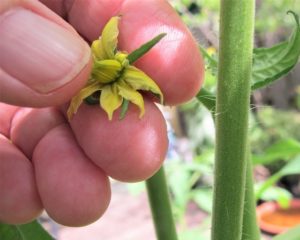
‘Cherokee Purple’ tomato.
Easily done. No, you don’t need a paintbrush to transfer pollen from one flower to another. When the flower is fully open and dry, simply tickle or tap the flower. I use a fingertip to gently flick the flower parts extending outside the petals. The important parts are mostly enclosed within the flower. That vibration is sufficient to move dry pollen grains to the stigma. In these photos, I’m pollinating a pepper and a tomato.
For plants outside in the garden, wait for the dew to dry. Pollinate flowers that opened that morning or the day before; older flowers won’t successfully pollinate.
If not enough pollen grains stick to the stigma, the plant will reject the fruit. It will shrivel up, turn yellow, and fall off when it is still very small.
When very high summer temperatures kill the pollen in your garden peppers and tomatoes, hand-pollinate dry, open flowers before the pollen is damaged. Pollinating them early in the day could increase the yield during those hot midsummer days.
Tip #5: Fruits from Your Potted Peppers
A few days to a week after pollinating the flower, you’ll seed a tiny green fruit beginning to grow. Success!!
The fruit is ready to harvest once it has reached its mature size. That could be 2-3″ long for a ‘Lunchbox’ pepper, 5″ for one of the larger bells, or over 8″ for ‘Jimmy Nardello’. A mature green fruit tastes sweeter than an immature green fruit, but they’re both edible.
Wait another 2-3 weeks, though, and the fruit will change color. Small sweet peppers and hot peppers turn color a bit earlier than the larger bells. Red, orange, and yellow ripe peppers have more vitamin C and beneficial antioxidants than the green ones.
The ripe color of a pepper is determined by the cultivar, although some change color as they mature, from green to yellow, orange, and then red. But an ‘Olympus’ will always ripen red and a ‘Flavorburst’ will always ripen yellow-orange.
As with many types of peppers grown from seed, a small percentage might have a flavor that is hotter than expected. If both young fruits and ripe ones on a healthy plant are distasteful, compost the plant. A pepper yielding flavorful fruits in summer should continue growing flavorful fruits after being potted up. But remember to keep hot peppers a good distance from the sweet peppers.
Use pruners to harvest the peppers. Snapping the fruit sometimes results in part of the branch detaching from the plant.
No New Fruits?
A potted pepper with a few or several ripe (colorful) peppers seems to stop growing. There might not be any new foliage or flowers visible on the plant.
A plant’s goal in life is to make seeds for the next generation. So, the plant concentrates all resources into maximizing seed viability. Growing new flowers would divide those resources, so, instead, the plant stops blooming. The products of photosynthesis are sent to the existing maturing fruits with their developing seeds inside. Other vegetables (cucumber, zucchini, peas, beans) also stop blooming and producing fruits if only one very mature fruit remains on the plant.
A week or two after those ripe fruits are harvested, you’ll once again see flower buds. If it’s near the middle of winter, though, the plants might not flower again until the days begin to substantially lengthen, in late winter or early spring. For the earliest flowers, give the peppers abundant sunshine.
Hand-pollinating the flowers in early spring guarantees fruiting before the potted peppers are returned to the summer garden. They can stay in their pots or you can plant them into the garden—after frost is over—for an early harvest. Remember to harden off the plants before exposing them to outdoor conditions.
With no garden space available, transplant your peppers into larger pots for growing on the patio or balcony. You’ll be the first one on the block with those ripe bell peppers or a handful of jalapeños!
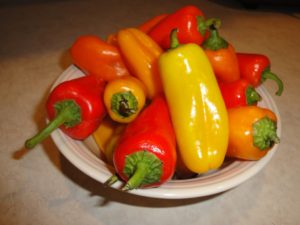
Lunchbox peppers.
Headings
Page 1: As Autumn Approaches (Why would we grow potted peppers in winter?, Early Fruits Next Summer), Tip #1: Start with Healthy Transplants, Tip #2: Transplanting Potted Peppers (The Pots, The Potting Soil, The Process, The First Watering, Varieties of Potted Peppers Often Grown Indoors, Dig It)
Page 2: Tip #3: Caring for Your Potted Peppers (Direct Sunlight and Temperature, Artificial Light, Water for Potted Peppers, Fertilizer, Timed Release Fertilizer, “Should I use organic fertilizer?”, Insects and Spider Mites, The Tobacco Hornworm, Beneficial Insects)
Page 3: Tip #4: Pollinating Your Potted Peppers, Tip #5: Fruits from Your Potted Peppers (No New Fruits?)
You’re welcome!
I found your explanation incredibly helpful, thanks!