2018
Updated 7/22/2025
Here Are Some Simple Solutions If Your Tomato Plants Have No Fruits In July and August
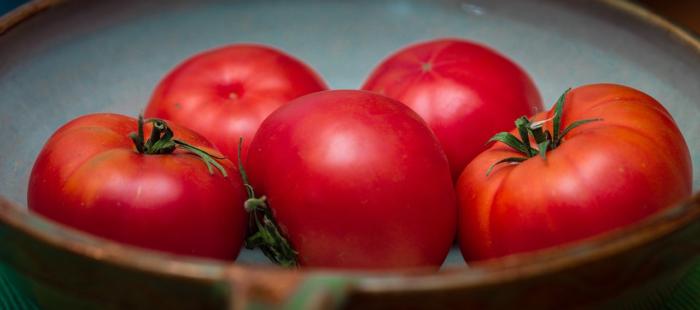
Above-normal summer temperatures here in the Southeast are becoming more commonplace. With warming weather patterns, our vegetable gardens present us with a few challenges. I’m going to spend a few minutes to explain why we often have no fruits on our tomato plants when it gets real hot outside. In most years, though, production picks up again in late August or September when the temperatures drop several degrees.
 The crop that home gardeners are most concerned about is the tomato. But this could happen to peppers, eggplants, and other vegetables as well. When temperatures soar into the 90’s F, the pollen produced in the flower is “denatured”, or, essentially, killed. No pollen means no fruits!
In air that is very still or humid, the pollen grains are less likely to be dispersed. Since we can’t control the weather, I’ll concentrate on what we can do.
Try Some Shade For Tomatoes With No Fruits

Before you replace your vegetables with agaves and astroturf, try this for a better harvest:
If high temperatures are the problem, and not lack of pollinating insects, provide a bit of shade during the hottest part of the day, usually from 1:00 to 5:00 in the afternoon.
Here’s How:
Tall stakes stuck in the ground supporting an old sheer curtain could work. Make sure any covering is above the foliage, so air flow and pollinators are not impeded.
One day, a customer stopped by the garden center where I used to work and thanked me for the suggestion. He said he finally (after many years of trying!) was able to get tomatoes in the hot summer months by simply repositioning the patio umbrella to shade his tomatoes for a few hours in the afternoon.
Look for black UV stabilized polyethylene mesh, sold as knitted shade cloth. Johnny’s Selected Seeds and other garden supply companies list the product in their catalogs. For the hot south (northern hemisphere), a product that casts 30% shade works well. Or you might find that 40% or 50% shade works better. Position it overhead and on the west side to cut the harsh midday and afternoon sun.
During severely hot periods, cover the entire plant or garden with shade cloth. Plan the support system for easy removal when temperatures drop. A little experimenting will indicate the best arrangement.
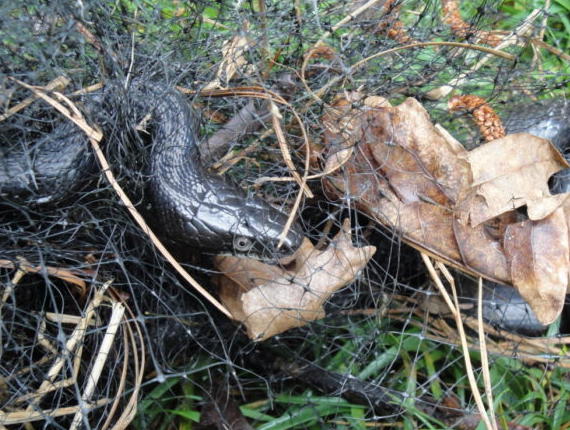
This non-venomous rat snake was freed by snipping the mesh, starting at the tail end.
If you have black deer netting, folding it over several times will give you about the same effect as the shade cloth. Check it daily, though, for snakes that can get caught up in it. A few times, I used sharp-pointed scissors to free non-venomous snakes that had become entangled in the netting. Call the animal control office in your region if you’re uncomfortable with this.
Another option is lattice or snow fence attached to a sturdy frame.
If you use a canopy to temporarily cover the tomatoes, a mesh cover allows heat to rise through the fabric. Remember to adequately weigh it down. This mesh canopy was swept away from a protected location next to the house during a low-level tornado, even with 200+ pounds of weights:

The point is not to block all the light. You just want to tame the harsh sun for a few hours a day, dropping the temperature to below 88 or 90 degrees. Not every growing season will require this mitigation. But, if you don’t see tiny tomatoes growing on your plants in mid-summer, shading is one option you can try. When the temperatures moderate, remove the covering.
Shading the Flowers and Fruits
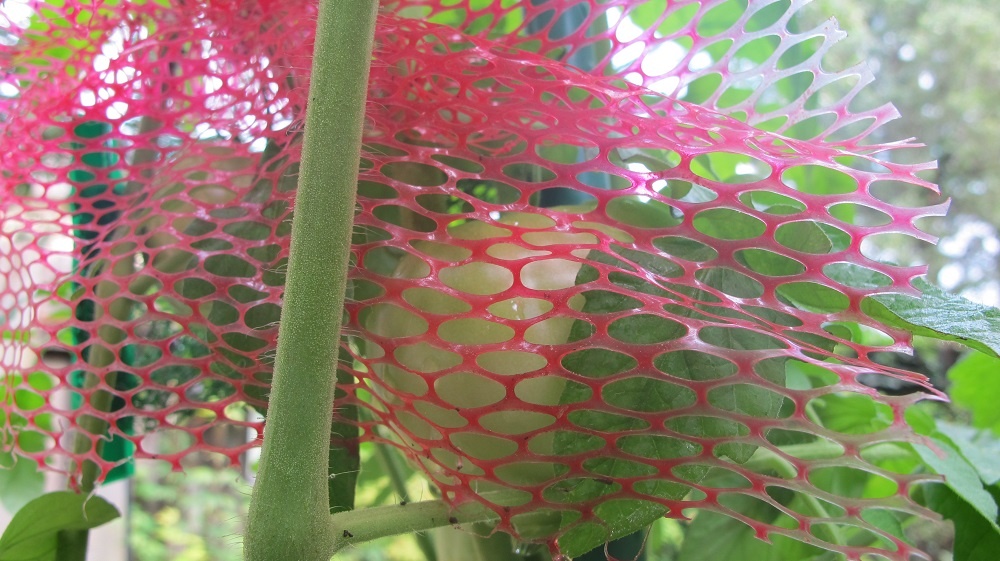
Sometimes it’s not practical or necessary to entirely shade the large plants on the deck. So, I’ll use those mesh bags found in the produce section at the grocery store (holding avocados or tangerines). When it’s hot, drape the mesh over the young flower cluster. It will stay in place as the fruit develops. This helps keep the flowers cooler and the animals away, and prevents sun scald on ripening fruits.
Occasionally we have summers when the temperature hovers in the mid to high 90’s for weeks at a time, not cooling off much at night. We might not get any tomatoes at that time, until the weather cools. But we do harvest more tomatoes by shading than if we did nothing.
Cultivar Selection
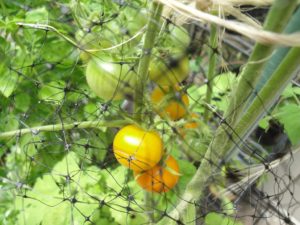
‘Sun Gold’ tomato with netting to keep animals away.
Choose tomato varieties that are more heat-resistant; their pollen tolerates higher temperatures. Names that allude to the south or to heat are clues that those varieties could grow better in warm climates. ‘Phoenix’, ‘Estiva’, ‘Arkansas Traveler’, ‘Florida 91’, ‘Creole’, ‘Heatmaster’, and ‘Summer Set’ are cultivars often cited as being heat-resistant.
‘Better Boy’, ‘Terenzo’, and ‘Black Krim’ also should do well. The bright orange cherry tomato, ‘Sun Gold’, produces abundantly in our hot summers. ‘Big Beef Plus’ has always been reliably productive here and is highly disease resistant. If you must grow your favorites, shading the flowers could help produce a better harvest.
Check online or ask your local cooperative extension agent for information on recommended cultivars in your region. The varieties that grew bountiful harvests every year when you lived in Buffalo, New York, might be disappointing in Birmingham, Alabama.
Pick Earlier
During very hot weather, fruits might not fully color-up to catalog pictures, so don’t leave them too long on the vine. Pick them once they’ve developed some color.
Let them ripen on the kitchen counter, but never in the refrigerator. Tomatoes exposed to temperatures below the mid 50’s undergo cellular changes that rob them of flavor and texture. Certain genes that enhance flavonoids in ripening fruits become inactive in cool temperatures.
Especially during periods of drought, thirsty animals know what’s inside those juicy ripe tomatoes! You won’t miss out on much flavor by picking tomatoes a day or two early…but they will.
Letting ripe fruits stay on the vine inhibits the production of new flowers. In order for the plant to ensure seed viability, it concentrates resources in the ripening fruits and stops producing new flowers. The plant thinks it has done its job by developing mature seeds for the next generation. Removing ripe or almost ripe fruits reminds the plant to resume its responsibilities. It will begin flowering again within 7-10 days.
Mulch
Pine straw.
Mulch the soil throughout the garden with a thick layer of airy mulch, such as weed-free straw, pine straw, or oak leaves. Clean chemical-free grass clippings mixed with shredded leaves can be used, but not so deep that decomposition (of the grass) generates even more heat.
These materials add organic matter to the soil as they break down, keeping the earthworms and the microbes happy. Microbes, living very briefly and numbering in the billions in 1 tablespoon of soil, release nutrients with normal functioning and when they die. After earthworms consume soil and debris, they excrete castings loaded with nitrogen-rich nutrients and beneficial microbes. It is then—when nutrients are in simple molecular form and dissolved in water—that plant roots can absorb this nourishment.
Mulch also helps prevent disease spores lying dormant in the soil from splashing onto the lower leaves of the plant. And, of course, it holds moisture in the soil, keeps it a little cooler, and suppresses weeds.
Water
Water thoroughly during hot, dry weather to moisten the top 10″ to 12″ of soil once or twice a week. Sandy soil requires watering more often. Established vegetables, in average soil, normally need 1″ to 2″ of water per week, but more in hot weather. Here’s why:
- Lack of water causes wilt, stressing the plant.
- Lack of water causes flower-drop. (Incidentally, flower-drop early in the season can be caused by cool weather.)
- To prevent blossom-end rot, there must be enough moisture in the soil to keep calcium in solution.
- Fruits that crack are responding to uneven soil moisture levels, although some cultivars are more susceptible to this. Cracked fruits are still edible, after checking for little critters (insects, slugs, sowbugs) that might be sipping the fluids. It’s safer to discard fruits that have been partially eaten by raccoons or squirrels.
- And a thorough watering in hot weather cools down the soil. But first check the temperature of the water coming out of a hose that sits in the sun. It could be way too hot for plants! Don’t overdo the watering, which dilutes the flavor of ripening fruits and causes other problems.
Thorough and deep soil preparation invites roots to grow where the soil is cooler and where there’s more moisture. Avoid the temptation to add a little organic matter under each transplant; instead, generously amend the entire bed for better results.
The more we can minimize stressful conditions, the more likely our vegetable gardens will perform the way we’d like them to. An added bonus is fewer problems with insects and disease when plants aren’t stressed.
Better Pollination
Hand-Pollinate Flowers If No Fruits Are Growing
-
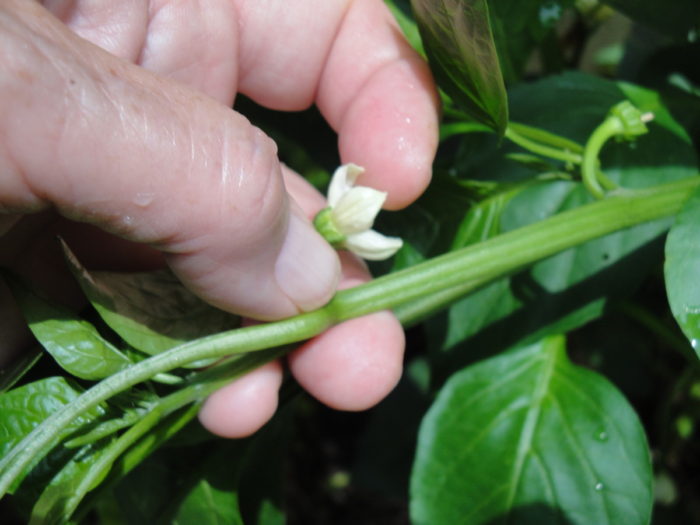
- Sweet bell pepper.
-
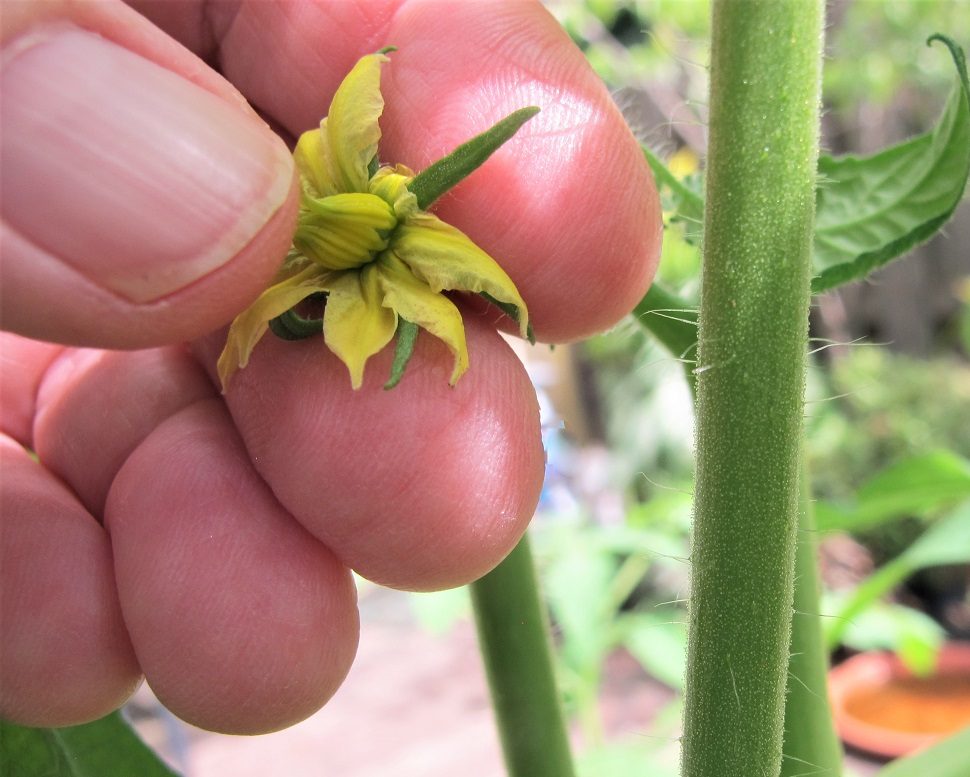
- ‘Cherokee Purple’ tomato.
If pollinating insects are not plentiful around your garden, try hand-pollinating your tomatoes and peppers. Usually just tickling, tapping, or vibrating the flower is sufficient for the task.
Each tomato, pepper, and eggplant flower is a “perfect” flower, containing both male and female reproductive parts. So, these members of the Solanaceae family can self-pollinate. They also can receive pollen from other flowers or plants of the same species via pollinating insects and the wind.
Hand-pollination works if the pollen hasn’t already been killed by heat. Do this in the morning after the dew has dried, but before temperatures soar. For plants in this family (the nightshades), there’s no need to use a paintbrush to transfer pollen from one flower to another.
Photos, above, show the simple procedure for pollinating a pepper and a tomato flower. Gently flick or tickle a fully open—but not old—flower to dislodge pollen grains from the anther and move them to the stigma.
The pepper in the photo was unlabeled and purchased at a big box store. It had a big floppy habit. There were no fruits on it for the longest time, and I was about to remove it. But I gave it one last try, and hand-pollinated all the flowers. It yielded a dozen big bell peppers from hand-pollination, and continued flowering and fruiting until frost.
‘African Blue’ Basil
Plant an ‘African Blue’ basil near the garden. This is an ornamental basil and a pollinator magnet! Because it’s sterile and can’t set seed, it keeps flowering all summer long. You can find this variety in late spring or summer as potted transplants.
Few plants attract as many pollinators. Having one of these plants near your vegetables will guarantee visits from honey bees, bumble bees, butterflies, and other pollinators. In fact, bumble bees often spend the night among its flowers, ready to go to work with the sunrise and some warmth.
Where this basil is not found, plant marigolds, lantana, and small salvias to attract pollinators.
* * * * * * * * *
If you’re following sound horticultural practices and can’t understand why your vegetables have no fruits, try shading them for a few hours. Or perhaps one of the other suggestions will work for you.
I’ve had dozens of customers over the years who have tried shading and hand-pollinating when nothing else worked, and now they enjoy vine-ripened tomatoes and peppers, often without interruption. Tomato-basil salad, coming up!