Page 3
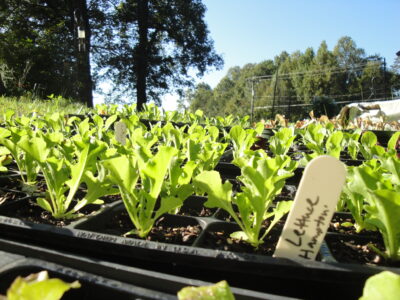
Lettuce ‘Hampton’.
More Greens for Cool Season Gardening
The Lettuces
As temperatures soared above 85°F in early June, 2025, I moved the lettuce planters into morning sun and light afternoon shade. We have to balance temperature and sunlight so the plants won’t decline in vigor. Give lettuce full sun during cooler weather. But if high temperatures (above 75-80°) cause stress and wilt, move it to morning sun/afternoon shade. Avoid overwatering when plants are given less sunlight, but never let lettuce run dry.
For summer production in pots, consider using light-colored containers to reflect some of the sun’s energy, keeping the soil a bit cooler. Conversely, in winter, using dark pots can keep the soil a few degrees warmer most of the day. Find a spot where winter lettuces and other greens can grow in full sun for the best results.
With hundreds of lettuce cultivars and mixtures available as seeds, I’m delighted that some grow well without going bitter in hot weather. My favorites for reliable summer production are ‘Muir’ (a beautiful green summer crisp), ‘Magenta’ (another summer crisp lettuce with red-tinged green leaves), and ‘Skyphos’, a green and red butterhead.
Instead of waiting for a lettuce plant to form a head, you can harvest the older, outer leaves while letting the central growing tip continue developing. Healthy lettuce can produce leafy harvests for months! Toss into the compost bin older leaves with poor color; they won’t taste good.
Always check for aphids, those tiny insects that often have magical powers of camouflage; rinse well. Slugs sometimes find their way between the leaves, so check thoroughly. It happens rarely, but slugs can transmit a meningitis-type illness.
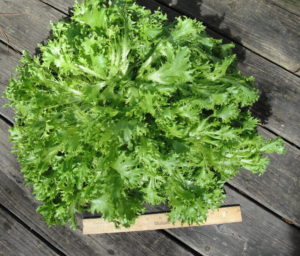
An Incised ‘Salanova’ lettuce.
The trademarked ‘Salanova’ series of lettuces, from Johnny’s Selected Seeds, lasted well into summer. Heavy daily rainstorms this year (2025), however, finally did them in. The seeds are more expensive, but most of these varieties grow quite large and dense with leaves. In the photo, above, taken a few years ago, this ‘Green Incised Salanova’ variety grew over 20″ across. I had already picked off the outer leaves when the photo was taken.
Johnny’s now offers 12 kinds of ‘Salanova’ lettuces: red and green Incised, Sweet Crisp, Butter, Oakleaf, Batavia, and 2 more reds. Notations in the catalog indicate which varieties grow better in summer.
For frequent large salads, I always use both red and green lettuces. The reds have more beneficial antioxidants, represented by a group of pigments called anthocyanins.
Another selection from Johnny’s is their Allstar Gourmet Lettuce Mix, comprising a few varieties with varying colors and leaf shapes (photo, below). You can see that I select a good number of red varieties for my own consumption. This is my primary blend for growing in planters through the entire winter. It’s only about 8 months after planting that these plants finally tell me, “We’re done.”
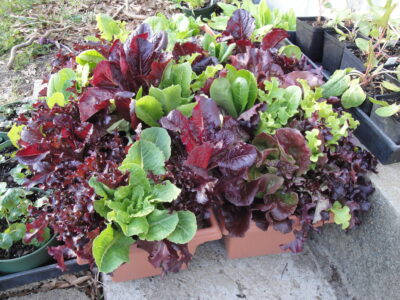
Allstar Gourmet Lettuce Mix, in 18 x 7″ planters.
My Lettuce Favorites
These are grown for my kitchen, and sold as transplants or limited harvests at farmers’ markets:
- ‘Black Seeded Simpson’: green heirloom, wavy loose-leaf
- ‘Brentwood’: deep red with green heart, a one-cut
- ‘Freckles’: heirloom romaine, burgundy-spotted green leaves, flavor can be strong, best in cool weather
- ‘Green Forest’: deep green upright romaine for cool weather
- ‘Hampton’: beautiful one-cut type with deep emerald green, lobed leaves (photo, top)
- Johnny’s Allstar Gourmet Lettuce Mix: sown several times throughout the year
- Johnny’s ‘Salanova’: the incised and sweet crisp varieties grow large
- ‘Magenta’: heat and cold tolerant red and green summer crisp
- ‘Merveille des Quatre Saisons’: 1880 French heirloom butterhead
- ‘Muir’: very heat tolerant summer crisp (Batavia), attractive green ruffled foliage
- ‘Nancy’: light green, very tender butterhead
- ‘Oscarde’: oakleaf, red leaves, green heart
- ‘Outredgeous’: develops deep red color with sun, beautiful glossy leaves
- ‘Red Salad Bowl’: oakleaf, lobed red leaves
- ‘Rouge d’Hiver’: French heirloom romaine, red/bronze leaves, very cold hardy
- ‘Skyphos’: green and red tender butterhead
- ‘Sparx’: green romaine for cool and warm weather
- ‘Sunland’: green romaine, does fairly well in warm weather
Swiss Chard
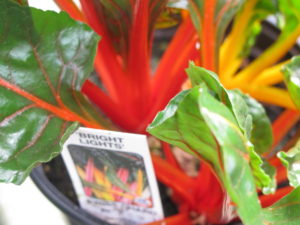
‘Bright Lights’ Swiss chard.
Colorful Swiss chard is so beautiful that I use it in ornamental gardens, potted combinations of edible greens, as well as with other vegetables.
‘Charbell’ is especially impressive with glossy, deep burgundy foliage and vibrant magenta stems. These plants survived this awfully hot summer, but only because I stuck leafy tree branches into the ground to shade them from hot afternoon sun. We had long periods of time when the heat index was around 100°F.
‘Bright Lights’ is a favorite strain for all the various colors it produces—white, yellow, orange, pink, red, magenta (photo, above). This chard planted in the warm microclimate in front of the sunny enclosed porch lasted all winter one year, growing over 5′ tall! As a biennial, it flowered and then died in late spring.
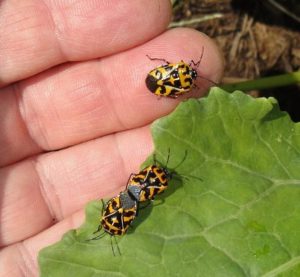
Harlequin bugs on cabbage.
‘Orange Chiffon’ offers luminous golden orange stems and light green leaves. Harlequin bugs and caterpillars were especially fond of this cultivar. For the orange and black harlequin bugs, I squished them when I found them. Organic Btk—Bacillus thuringiensis v. kurstaki, a very safe biological insecticide—effectively kept caterpillars in check if used every 2-3 days. Because I water flats of plants every day or two, the Bt washes off. Insect screening might be in my garden’s future. (More on Bt, below.)
‘Argentata’, with white stems and tender, pale green leaves, struggled to stay alive this summer, and it didn’t like the frosty weather earlier in the year, either. Now that it’s cool and comfortable, ‘Argentata’ is recovering. (***Update***: This variety survived the winter, and is now huge and beautiful. I’ll harvest all the leaves before flowers develop, and prepare them for the freezer. 5/24/2026)
Swiss chard loves cool to warm temperatures, but most varieties struggle at the extremes. Start seeds in midsummer and again in spring after the soil has warmed somewhat. Young plants exposed to temperatures below 50° for several nights might flower prematurely and not last the entire season. Later, as mature plants, they’ll tolerate cooler temperatures.
For this plant, use low tunnels, temporary coverings, or microclimates to prolong its usefulness. Grow a few plants in a large container, moved to follow the sun or placed under cover when the temperature dips below 25°.
What else can we expect from cool season gardening?
Most of the brassicas, carrots, green onions, leeks, lettuce, spinach, and Swiss chard survive winter conditions if temperatures are within normal limits. But we can’t always count on that! This is where experimenting with different techniques and varieties contributes to the education of any gardener.
Brussels sprouts yields by Christmas, and carrots can stay in the ground, protected with a layer of straw, snow, or oak leaves. I’ll soon construct two 8 x 4 x 1′ raised beds for strawberries, carrots, radishes, and a few other small crops. If I get around to it, I’ll cover those beds with a removable cattle panel frame covered with greenhouse film, and insect screening for the summer.
Peas (‘Sugar Snap’ and ‘Oregon Giant’) sown in August produce pods for several weeks or a couple of months before a hard freeze kills them. Last year’s 10″ pot of ‘Sugar Snap’ peas kept in the enclosed sunny porch yielded enough pods to make it worth the effort, but not as many as in the earlier fall garden. Pea flowers are self-fertile and don’t require pollination. Now that it’s late September, I’ve potted a dozen seedlings into a 10″ pot to grow in the porch when it gets frosty. (***Update***: I picked about 20 filled peapods today, and many more will continue growing for picking next week. 11/30/2025)
During an especially harsh cold snap—below 15-20°F—covering some garden beds at night with large sheets of plastic, old blankets, or fabric row covers can protect greens from severe cold damage. Bricks and cinderblocks hold the cover in place. Coverings must be removed before the morning sun heats up the plants.
Included on my list of to-do projects are several solutions for more efficient growing. Among them are construction of the greenhouse kit (finally!) and cattle panel low tunnels to protect flats of seedlings from the torrential rains we’ve been having these past few years.
This summer of 2025 has been especially difficult due to frequent rains, high winds, and oppressive heat and humidity. Although the gardens are still productive, I’ve had to cover many flats of seedlings many times. And, unfortunately, I lost some flats due to pelting rainstorms before I could get them under cover.
Soil Prep
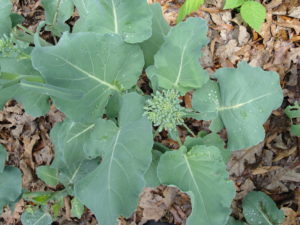
Miniature broccoli ‘Happy Rich’, ready for a harvest.
For successful cool season gardening, start with well-drained and well-amended garden soil. Greens love ample quantities of composted cow manure and compost incorporated with the soil, throughout the root zone. In this area, bagged composted “Black Kow” cow manure is available at the big box stores. Avoid using manure with root vegetables.
The soil pH should be slightly acidic to slightly alkaline, from 6.5 to 7.3. Cool season greens need fairly moist but not soggy soil. Add pulverized lime to raise the pH in acidic soils. A soil test analyzed by the agricultural extension office can tell you how much to add.
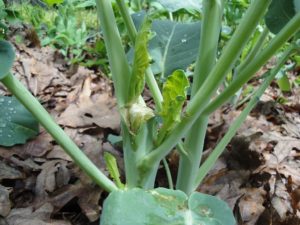
Broccoli ‘Happy Rich’ regrowing after a harvest.
In my experience, the more compost and other organic matter incorporated into the soil, the better the plants will grow. My favorite vegetable, miniature broccoli ‘Happy Rich’, responds to extra portions of composted cow manure. Without super-enriched soil, the stem will not be as tender—or the leaves as large—as I like. ‘Happy Rich’ branches out again, repeatedly, after the top 6-12″ has been harvested.
After planting, apply a fairly thick layer of an airy mulch (pine straw, oak leaves, weed-free straw), which helps moderate soil temperature, suppress weeds, and conserve moisture.
Your greens need supplemental fertilizer now and then for continuing harvests. Look for fish emulsion, sea-and-kelp products, earthworm castings, blood meal, and other organic fertilizers, or use more compost and aged manure. Foliage plants need more nitrogen than summer fruiting vegetables.
When the soil is cold, and if the plants need nutrients, use a soluble synthetic fertilizer so the plants can absorb it. Microbes that break down organic matter and provide nutrients to the roots are inactive in cold soil. If the soil has been super-charged with compost and composted cow manure before cold weather settles in, these crops might not need the synthetic fertilizer.
Caterpillars and Aphids
Yes, we can expect them, as well.
-
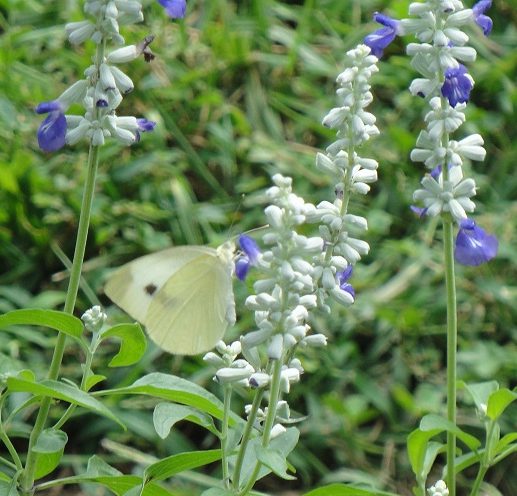
- Cabbage white butterfly.
-
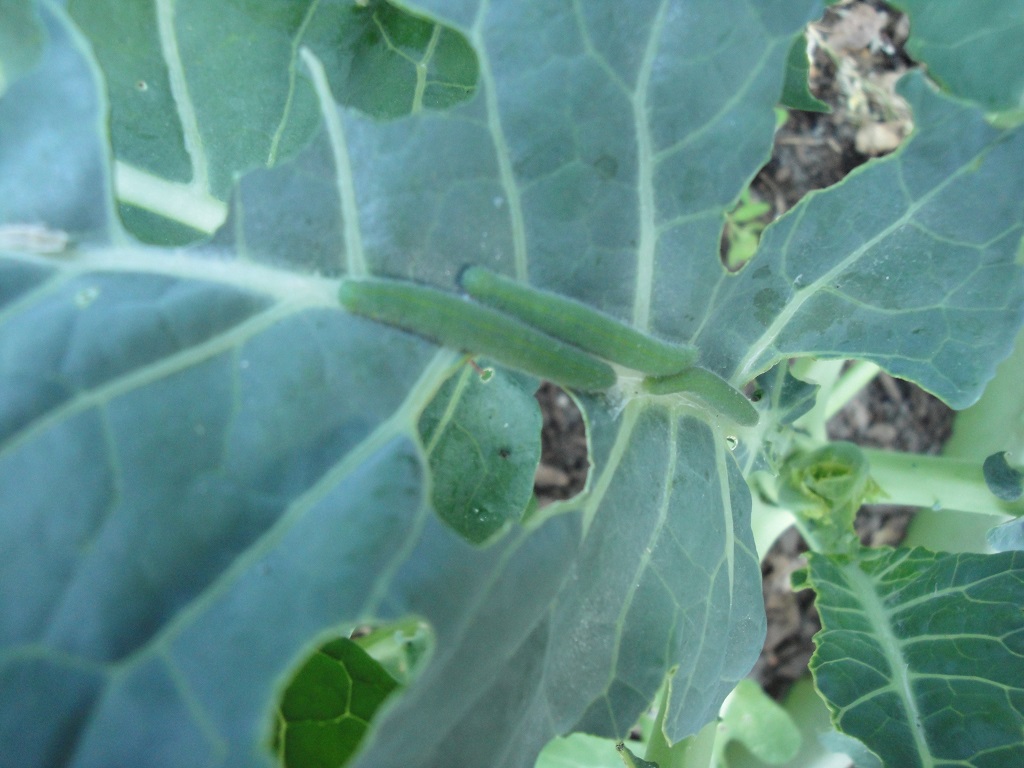
- Larval cabbage whites. Very tiny eggs are laid singly, usually on the bottom of a leaf.
-
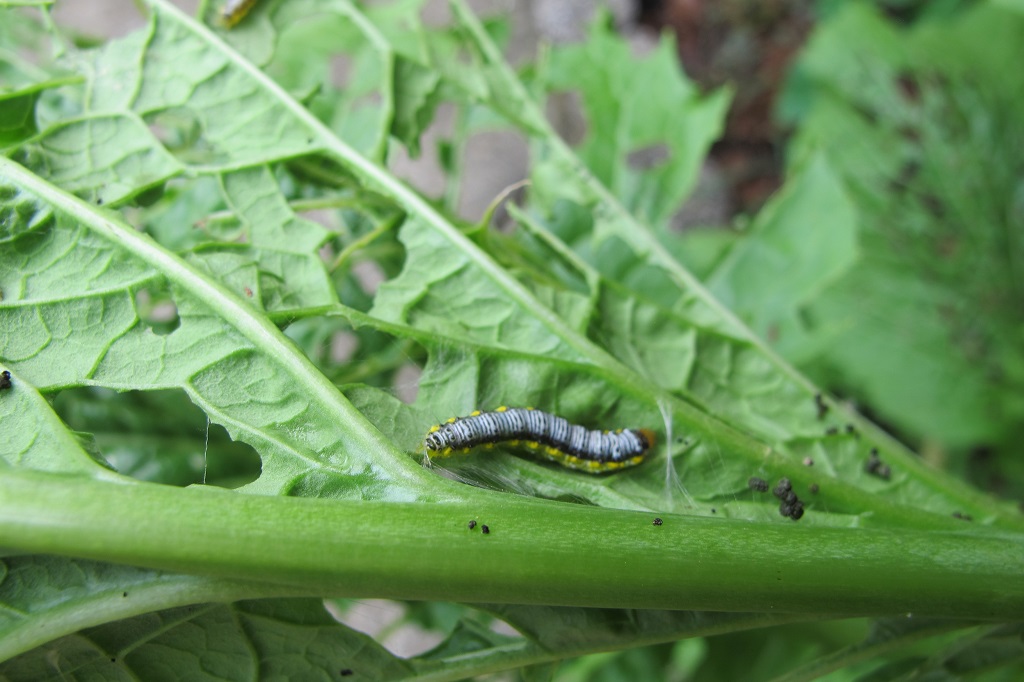
- Cross-striped cabbageworm on mustard greens.
The brassicas are especially attractive to cabbage white butterflies that we see flying around in the daytime. In the evening, when we don’t see them, 2 or 3 species of moths also lay eggs on these plants. Before those caterpillars completely destroy your cole crops, have a small bottle of Btk (Bacillus thuringiensis v. kurstaki) handy.
Btk is a naturally occurring bacterium that targets caterpillars of moths and butterflies, and nothing else. (Other strains of Bt target various pests—mosquitoes, soil nematodes, and others—but Btk is used to control larvae of moths and butterflies). It’s safe to use, available as an organic product, and easily rinses off the produce. It should be stored cool and dark. Buy a new small bottle every 3 years or so, since it loses effectiveness over time.
Because I water flats of transplants daily in warm weather, I apply a solution of Btk every 2-3 days. In the gardens, though, one application kills all the larvae present and also young caterpillars hatching within a few days if there’s no rain or irrigation. So, the garden plants are sprayed every 4-7 days. After the first several fall frosts or freezes, these insects won’t be a problem.
The 2025 season brought us heavy populations of butterflies and other insects—more than I’ve seen in years. Maybe that’s because of the frequent rainstorms that caused plants to grow more foliage. More foliage = more food for wildlife.
Aphids might congregate on the lower surface of lettuce leaves and other greens even as temperatures decrease. A brisk spray of cool water from the garden hose gets rid of most of them. Horticultural oil effectively smothers them, but remember to rinse the harvest very well. Always read product labels.
Slugs and snails, too, can be a problem, even in chilly weather. I use organic Sluggo or a similar product containing only iron phosphate.
Structures for Cool Season Gardening
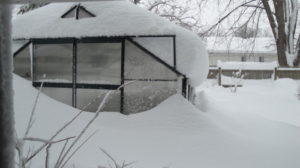
Because spinach and several other greens are low-growing crops, they’re well-adapted to growing in caterpillar tunnels. This is a simple structure composed of wire supports covered with clear plastic, and weighed down on the sides. Vent the tunnel on a sunny day to cool it down and to admit fresh air, and close it up in late afternoon. You can fashion something yourself or buy a ready-made product.
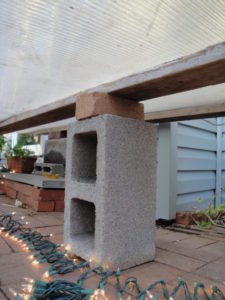
Setting up the cold frame in autumn (in MD).
Building a cold frame is another option for growing cool season greens where the plants would not survive frigid temperatures out in the open. Look for disease resistant cultivars to prevent crop failure in humid conditions. Monitor the soil for moisture content, and fertilize lightly if the crops continue growing. Several horticultural supply companies sell small structures using twinwall polycarbonate, a very durable product. You could also build a structure using the same or similar materials.
The cold frame I used when living in Maryland was composed of large sheets of twinwall polycarbonate with clear plastic film covering the whole structure. Mini incandescent lights warmed the space sufficiently to keep it above freezing. Boards and cinder blocks weighed down the plastic on the outside.
Try different methods for protecting plants in winter. Maybe the first structure blew away in a 40 mph event. It happens! Use heavy weights, sink the supports deeply into the subsoil, and keep the plastic pulled tightly over the frame to guide the air smoothly over the tunnel.
Locating the plants in a warmer microclimate, such as against the south side of the house or garage (northern hemisphere) or within a walled garden, elevates the temperature a few degrees and moderates high winds. This little bit of protection keeps the crops producing, whereas they might fail where they’re more exposed 20′ away.
The Greenhouse
Several of my farmers’ market customers have unheated greenhouses for cool season gardening. They need to be vented during sunny daytime hours to prevent overheating. Installing solar vents helps release hot air, but the plants might need more cooling than that (with an open door, roll-up sides, exhaust fans, shade fabric). Try to prevent the temperature from soaring above 80° in winter.
While they do afford good protection at night, a greenhouse can still get frosty inside. But that won’t hurt frost-hardy greens. Maintaining the crops above outside temperatures keeps them in better condition and producing more harvests through the winter.
In colder climates, consider securing a second layer of plastic inside the greenhouse itself, to make a double-skinned structure. Or create a protective plastic bubble above the crops. Each layer gives more insulation, but it also reduces light reaching the plants.
Leafy greens that tolerate cool to cold weather thrive in a greenhouse, and there are fewer problems with wind and wildlife. You might have to watch out for aphids, though. I use a vigorous spray of cool water from the hose to wash them off. For insects that linger, use a mild solution of horticultural oil. The warmer it is, the more aphids you’ll have to deal with.
Slugs might find refuge inside a moist greenhouse. Use organic slug bait or other means of trapping them. Always rinse produce before consuming it.
A Note About Brassicas and Their Antioxidants
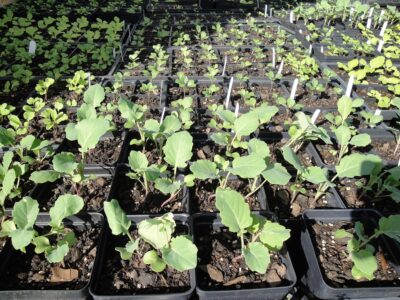
Miniature broccoli ‘Happy Rich’, arugula, turnip greens, and other brassicas waiting to be sold or planted in my gardens.
Unfinished projects notwithstanding, I still enjoy both the challenges and the rewards of cool season gardening. That many gardeners choose not to indulge in this second season of harvests has always baffled me. In fact, I almost prefer cool season vegetables over the tomatoes and peppers for the extremely beneficial nutrients that have kept me healthy into my 70’s. Still, I grow the warm season veggies every year, too. Some of the brassicas grow through the summer as well.
On that topic, consuming brassicas provides us with a group of extremely beneficial antioxidants called the sulforaphanes. No other plant family has them. These powerful antioxidants help prevent cardiovascular disease, type 2 diabetes, inflammation, and many kinds of cancer. They also help preserve eyesight, skin health, and brain function, among other benefits. What’s good for the heart is good for the brain!
An enzyme, called myrosinase, transforms sulforaphane precursors into the sulforaphanes themselves in chopped brassica greens. The enzyme needs 40+ minutes to work in damaged tissues, so cutting them up and letting them sit on the counter or in the refrigerator is sufficient to develop those sulforaphanes. However, heat destroys that enzyme. So, cutting the brassicas and cooking them right away gives you none of those valuable antioxidants.
If I can’t wait those 40 minutes for myrosinase to work its magic, I’ll eat a few raw pieces of the greens. This introduces myrosinase to my system, where it can work on the brassicas consumed after cooking them.
Incidentally, broccoli leaves contain more beneficial antioxidants than the head. Broccoli heads contain more amino acids. Unfortunately, those leaves are discarded at retail, so growing your own broccoli is the only way to get the most antioxidants.
I eat at least one of the brassicas every day, and have done so for more than 3 decades. Whether it’s luck or directly correlated, I don’t have the ailments for which both of my parents needed prescription medications over many years. Our health care providers might tell us to eat broccoli, collards, kale, and cauliflower (and the other brassicas), but we could also use this information about preserving those sulforaphanes for an even better health outcome.
* * * * * * *
I hope you’ll try cool season gardening and enjoy its benefits as much as I do. If this is new to you, try a few packs of transplants or lettuce seeds, and see how they do. It wouldn’t surprise me if you expanded your garden the next time around.
Wishing you happy gardening and good health!
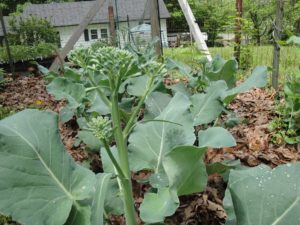
Miniature broccoli ‘Happy Rich’, my favorite vegetable.
Headings
Page 1: Today, In the Garden (Dealing with Frost, Covering Crops with Plastic or Old Sheets, Potted Plants for Growing Indoors, Moving Houseplants Indoors), Shopping Your Local Farmers’ Market (Supporting Your Local Economy)
Page 2: What can we grow in a cool season garden? (Herbs and Vegetables, Herbs That Tolerate Cool to Cold Weather, Basil, Cool Season Gardening in the Enclosed Porch, More Herbs, Potted Vegetables, Succulents and Young Tomatoes, The Brassicas for Cool Season Gardening, Broccoli, Variety or Cultivar?, Green Onions and Bunching Onions, For Sustainable Bunching Onions, Spinach)
Page 3: More Greens for Cool Season Gardening (The Lettuces, My Lettuce Favorites, Swiss Chard, What else can we expect from cool season gardening?, Soil Prep, Caterpillars and Aphids), Structures for Cool Season Gardening (The Greenhouse), A Note About Brassicas and Their Antioxidants